
The Field Rig
A 2024 Ford Bronco Outer Banks Sasquatch built for Utah desert roads, rock crawling, family camping, and bike trips.
A FEW PRACTICAL NOTES FROM THE BRONCO BUILD
The gear
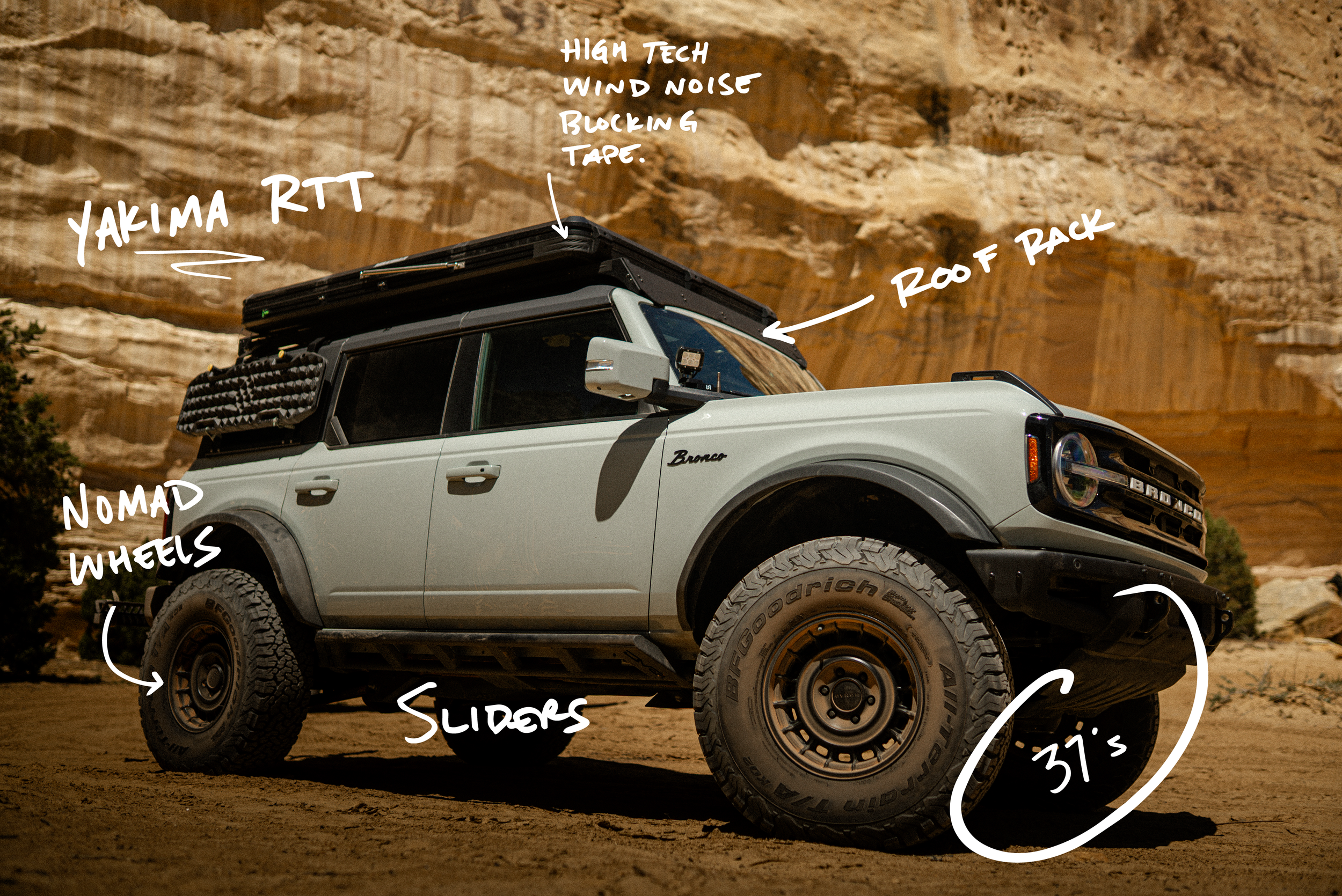
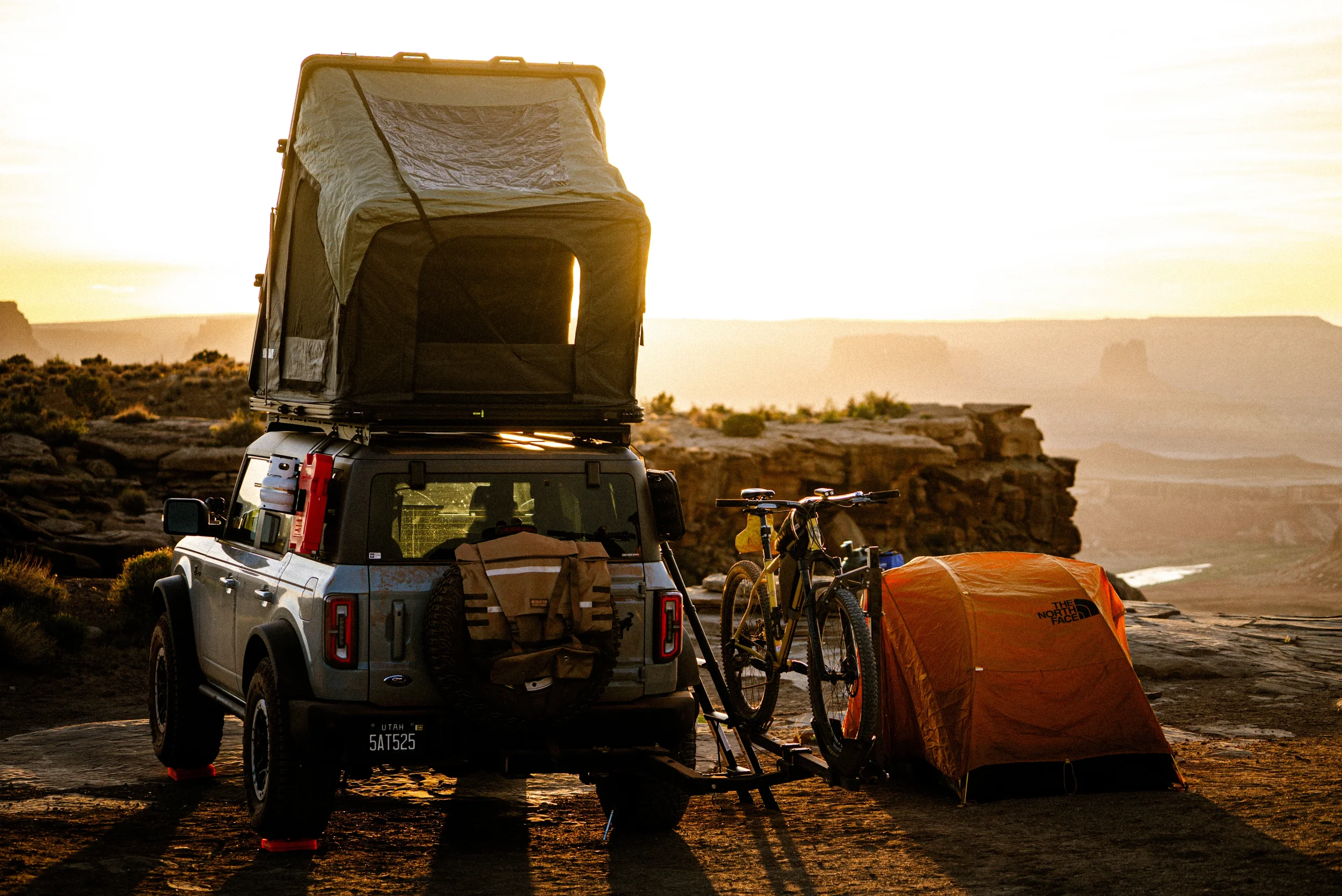
The Field Notes rig. Purpose-built for Utah desert road trips, bike haulin’, rock crawlin’, and making sure the bank account is always near zero. Simple, effective, and built for more than Instagram points.
2024 FORD BRONCO OUTER BANKS SASQUATCH
The base for the whole show.
3.5” TERAFLEX LIFT (FALCON COILOVERS)
Keeping it local and lifting just high enough to clear the tires while still parking in my garage.
NOMAD WHEELS
Round and stylish.
37” BF GOODRICH KO2
Added ground clearance while keeping highway manners polite.
TRAILRAX ROOF RACK
The place to put stuff.
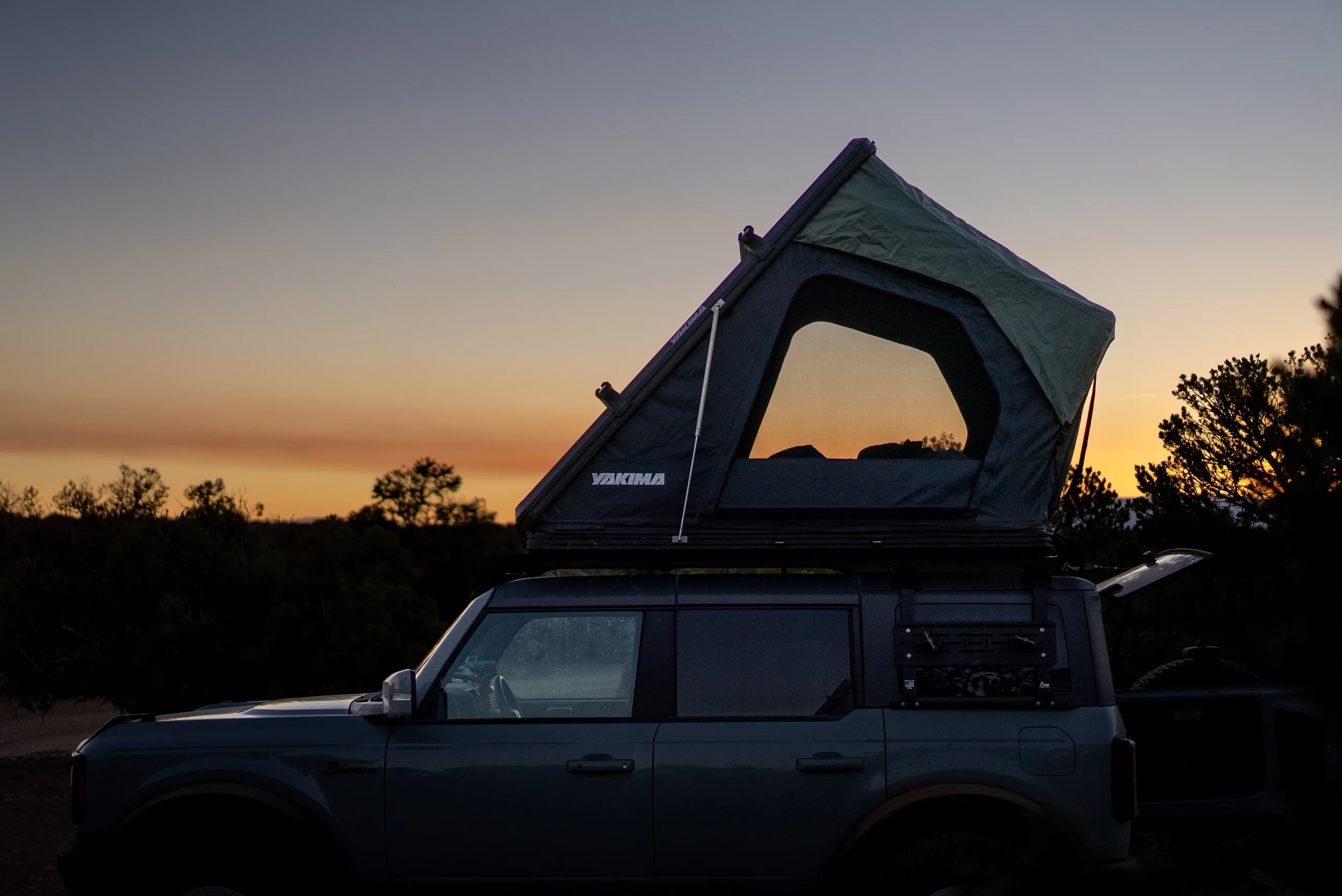
YAKIMA SKYPEAK HD RTT
The fort.
How I Use the Bronco
The Approach
The Bronco is my daily driver, weekend warrior, home base, and bike carrier. Because I need it to do a lot of things, I kept the setup fairly versatile. Not too many things are bolted down. I have to be able to change out the kit depending on where I'm going and what I’m doing. That said, I don’t want the Bronco to limit my ability to get to the spots I want to see, and I certainly enjoy the occasional day crawling. So it’s built tough, but practical — designed to drive Hell’s Revenge on a Sunday and then commute to the office Monday morning.
It runs a Teraflex lift kit and some 37” tires. I have minimal body armor, including rock sliders and some lower control arm skids.
Sleeping
At its core, it’s built around the Yakima rooftop tent. That’s the piece of gear that stays attached to the roof rack at all times. I’ve spent more nights up there than I can count. It’s comfortable and dry, and it provides high ground for fighting bears and wolves. It fits two grown-ups or an adult and two kids. When we go as a whole family, the dogs and I sleep on the ground and the family is in the rooftop fort.
Power
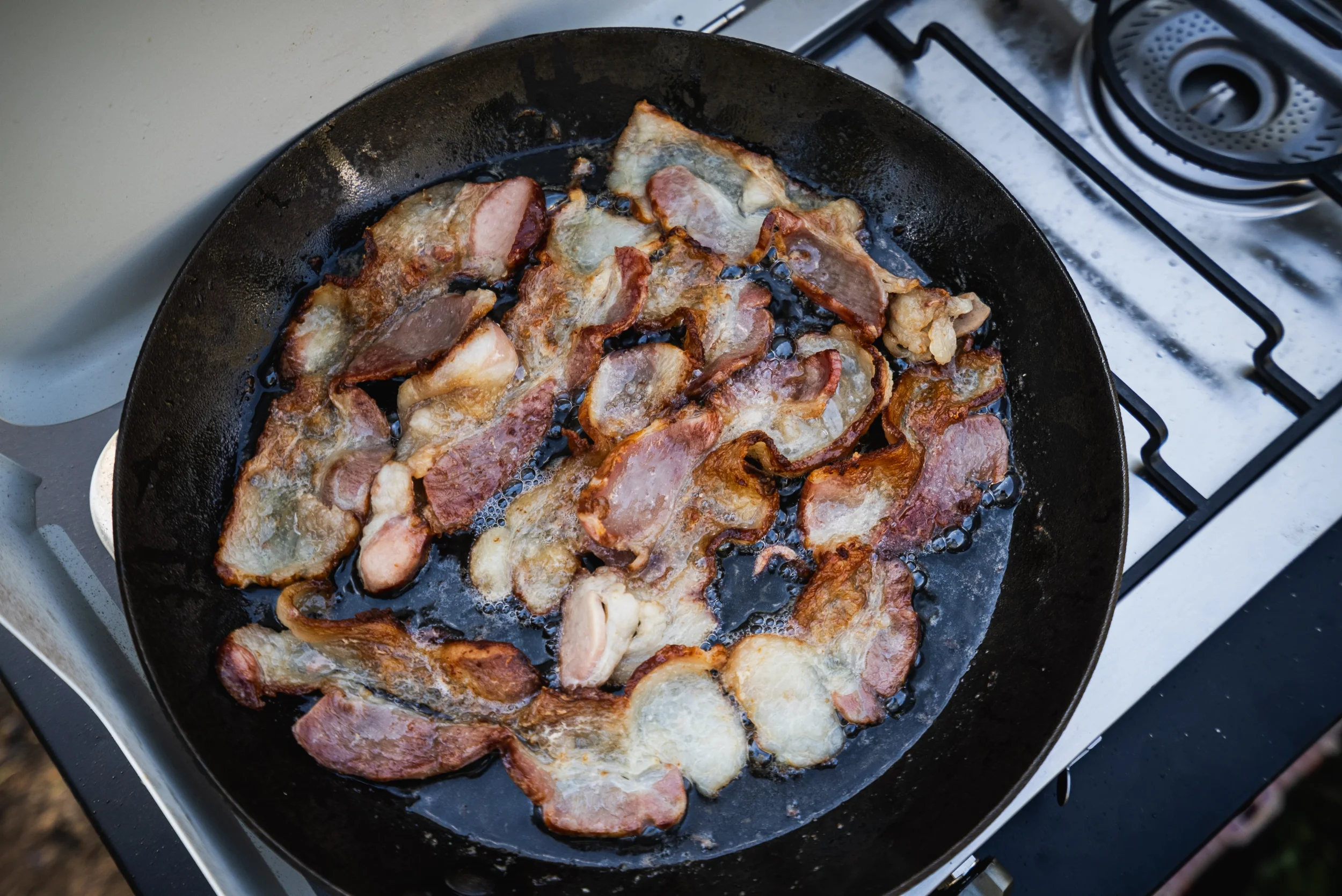
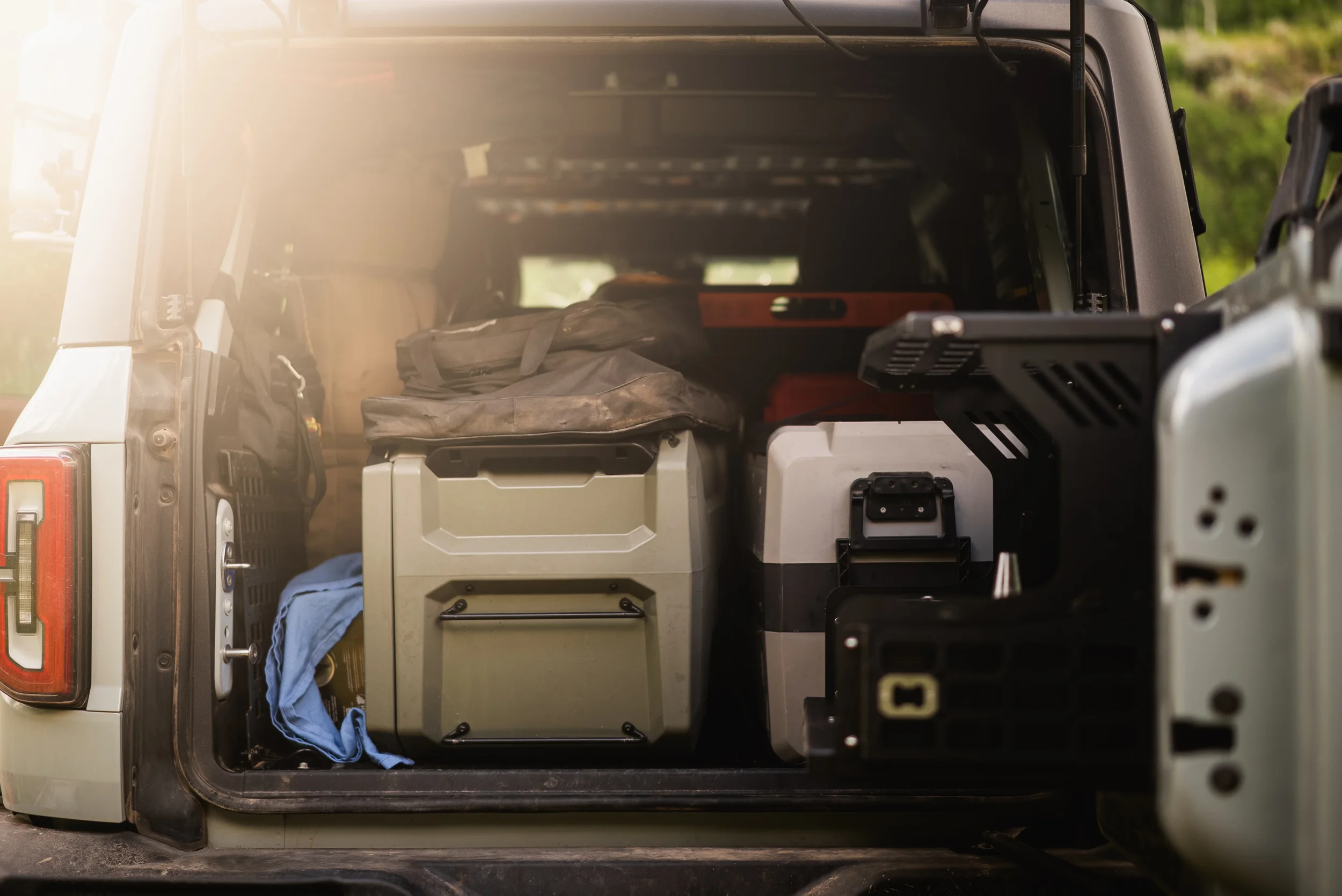
My baseline kit includes a cheap 12V fridge, usually full of Miller Lite and bacon. I power the fridge with a 1,000Wh Jackery battery. The fridge is so efficient that with my 100W solar panel, I can run it almost indefinitely. Once I fire up the Starlink, though, the battery lasts a good two to three days depending on how much driving and recharging time I get.
Cooking
My cook setup is a Yakima EXO OpenRange system. Its legs bring it roughly to counter height. We also have two tables that attach to the sides. It gives plenty of space for prep, cooking, and cleanup. It’s a tough and rugged box that I feel comfortable leaving out overnight. I cook on my ultra-thin Zempire stove with a carbon steel skillet. Or I pack the Ooni and make tailgate pizza.
Campsite
I never leave home without my loveseat camp chair and my cheapo 10x10 tarp with pre-rigged ridgeline and guylines. It takes me about 5 minutes to set up the tarp and have myself a living room in the great outdoors. There’s something about having a roof over your head that improves company morale.
The pièce de résistance is the Howl R1 propane fire pit. It fires up in about 32 seconds, provides heat, and maybe more importantly, vibes. I run it off a 10 lb refillable propane tank that lasts a weekend of long nights around the fire. I transport the tank on my TrailRax PackRax and some Titan Straps. It costs about $4 to refill.
Depending on the trip, I pack up to 10 gallons of water and 5 gallons of extra fuel in some RotoPax and an Amazon-special water jug with a battery-powered pump. And that rounds out the baseline kit.
4x4 Gear
I’ll pack tire deflators, a 12V air compressor that isn’t mounted in the engine bay, a static tow rope, a kinetic recovery rope, soft shackles, a bottle jack, tools, straps, and a battery-powered chainsaw with a 16-inch bar. That can get me out of most sticky situations. I’m not at the point in my crawling career where I’ve needed a winch.
Bike Transport Gear
For the bikes, I have a few different rack setups depending on my needs. The core of the kit is the Rig’d Ramble Swing and some sort of bike rack. I’ll pack the Yakima Stage 2 for daily driving and if I need multiple bikes. If I’m only carrying one bike, or the roads I’m driving get proper, I’ll rock the Rig’d Ramble Rack. It is sturdy AF and offers a better departure angle than any other rack I’ve used. If I’m by myself with a top-secret bike, the weather looks questionable, or I don’t want to leave it outside overnight, I’ll strap it down moto-style in the cargo area and pack my gear around it.
Annoying stuff
The Bronco is not a quiet vehicle. It sounds like what I can only describe as an F1 tornado inside, especially above 70 mph. I’m used to it by now, but my wife hates it. It’s also pretty compact. I’m coming from a full-size GMC Sierra, so I certainly miss the cargo space and payload capacity. I’ve had to get really scrappy about what I bring and how I pack.
I’ve dialed in my cargo space Tetris game and have some MOLLE Panels in the cargo space for keeping recovery gear, tools, gloves, straps, and emergency supplies secured and out of the way. Then I load all my gear up in an assortment of bins, boxes, and bags. It’s not pretty, but it’s not precious, and it works. All of it comes out when I get home, so I’m not dragging a ton of extra weight on the daily.
And lastly, the gas tank is very low. I’ve smacked it a handful of times. It’s also plastic. A full underbody skid is high on my list of additions.
-
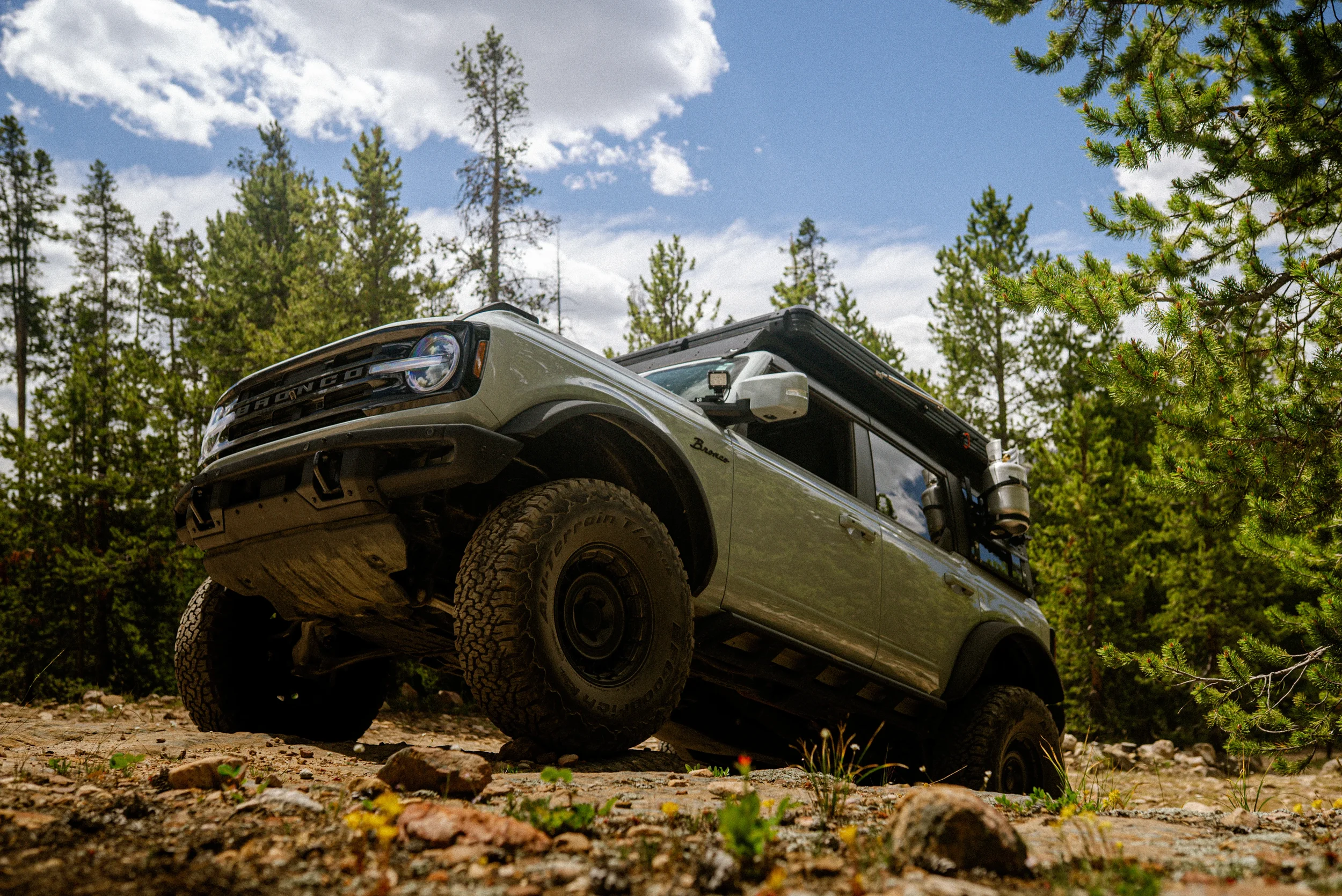
To fit 37s, I added a 3.5” Teraflex lift with Falcon coilovers and paired the tires with lighter Nomad wheels. The lift gave the Bronco the clearance it needed, but the bigger win was getting the suspension back into a better place after adding camping weight, roof gear, and the usual pile of trip junk.
The 37s added ground clearance and helped the Bronco feel better on desert roads, ledges, and rough tracks, but they also came with tradeoffs: a worse turning radius, a little more vague highway feel, and more tire to move around.
-
On my setup, crash bar clearance was part of the 37s conversation. Luckily, I didn’t have to touch them. Tire size, wheel offset, suspension height, and actual tire shape all matter, so there is not one universal answer for every Bronco. With my exact lift kit, and BF Goodrich KO2 37” tires, I cleared just fine.
The boring but useful answer: check clearance at full lock, under compression, and with the suspension loaded the way you actually use the truck. A tire that clears in the driveway may not clear the same way on a rough trail with camping gear, a rooftop tent, and the rear of the Bronco sitting deeper in the travel.
-
I’m running a Yakima SkyPeak HD rooftop tent on a TrailRax roof rack. The tent makes quick camp setup easier and gives the kids an elevated little sleep cave, while the rack gives the Bronco more usable storage for desert trips, bike weekends, and family camping.
The tradeoff is height and weight. The Bronco gets taller, the center of gravity changes, and garage clearance becomes something you think about more than any grown adult should.
-
The short version is that you need to think about the whole roof system, not just the tent. A stronger roof rack can help distribute weight and support rooftop camping gear better than the factory rails, but the limiting factor is still the vehicle, rack rating, tent weight, mounting setup, and whether you are talking about static load or dynamic load.
For my setup, the TrailRax roof rack is the foundation for carrying the Yakima SkyPeak HD rooftop tent. I also installed their Pack Rax system to increase the weight ratings. The Pack Rax sits on top of the rear fenders, adding some additional support. I still treat roof weight with respect because desert roads, wind, speed, and bouncing around off-road are very different from sitting still at camp.
-
Not great, because physics remains undefeated. With 37s, a lift, a roof rack, a rooftop tent, and camping gear, the Bronco is not exactly sipping fuel like a commuter car.
Real-world MPG depends heavily on speed, wind, elevation, tire pressure, road surface, and how much gear is loaded. Highway driving with the tent on top is the biggest hit. Desert roads and slower travel are less about MPG and more about accepting that the gas tank is part of the trip budget.
I’m usually getting between 14-16MPG, depending on how heavy I am.
-
The build works well for how I actually use the truck: Utah desert roads, family camping, bike trips, and the occasional Moab confidence check. If I changed anything, it would mostly be around storage and weight management, because space in the Bronco disappears fast once kids, dogs, water, tools, recovery gear, food, and camping gear get involved.
The truck is capable. The packing system is usually the real enemy.
-
This Bronco build is for Utah desert road trips, family camping, bike trips, San Rafael Swell exploring, Moab trails, Canyonlands-adjacent wandering, and getting to places that are just far enough out to feel worth the effort.
It is not a show build. It is not built for Instagram points. It is the truck behind the field notes.